
Through different art practices, both students examined how memories are preserved and passed down across generations, creating work that reflects on identity, belonging and the lasting connections between people, places and objects.
Weaving family history into textile design
For her final-year project, ‘Traces of Her’, Textile Design student Tabitha Lee transformed her grandmother's life story into a collection of printed textiles and interior furnishings.
Inspired by family photographs, handwritten letters, vintage wallpapers, lace tablecloths and treasured household objects, her project explores how textiles can become vessels for memory, preserving family histories through contemporary design.
Using techniques including screen printing, embroidery, laser cutting and upholstery, Tabitha translated significant moments from her grandmother's childhood, marriage, working life and later years into patterns and furnishings designed to be lived with and passed on.
Tabitha explained: "As my grandmother has grown older, I've become increasingly aware of how easily family stories and memories can fade over time. That awareness inspired me to explore how textiles could preserve these memories for future generations.
"Rather than documenting history in a traditional way, I wanted to translate it into patterns and objects that could be lived with and passed down, carrying emotional value alongside their practical function."
Each design within the collection represents a different chapter of her grandmother's life, from playful childhood motifs to agricultural landscapes reflecting years spent on the family farm.
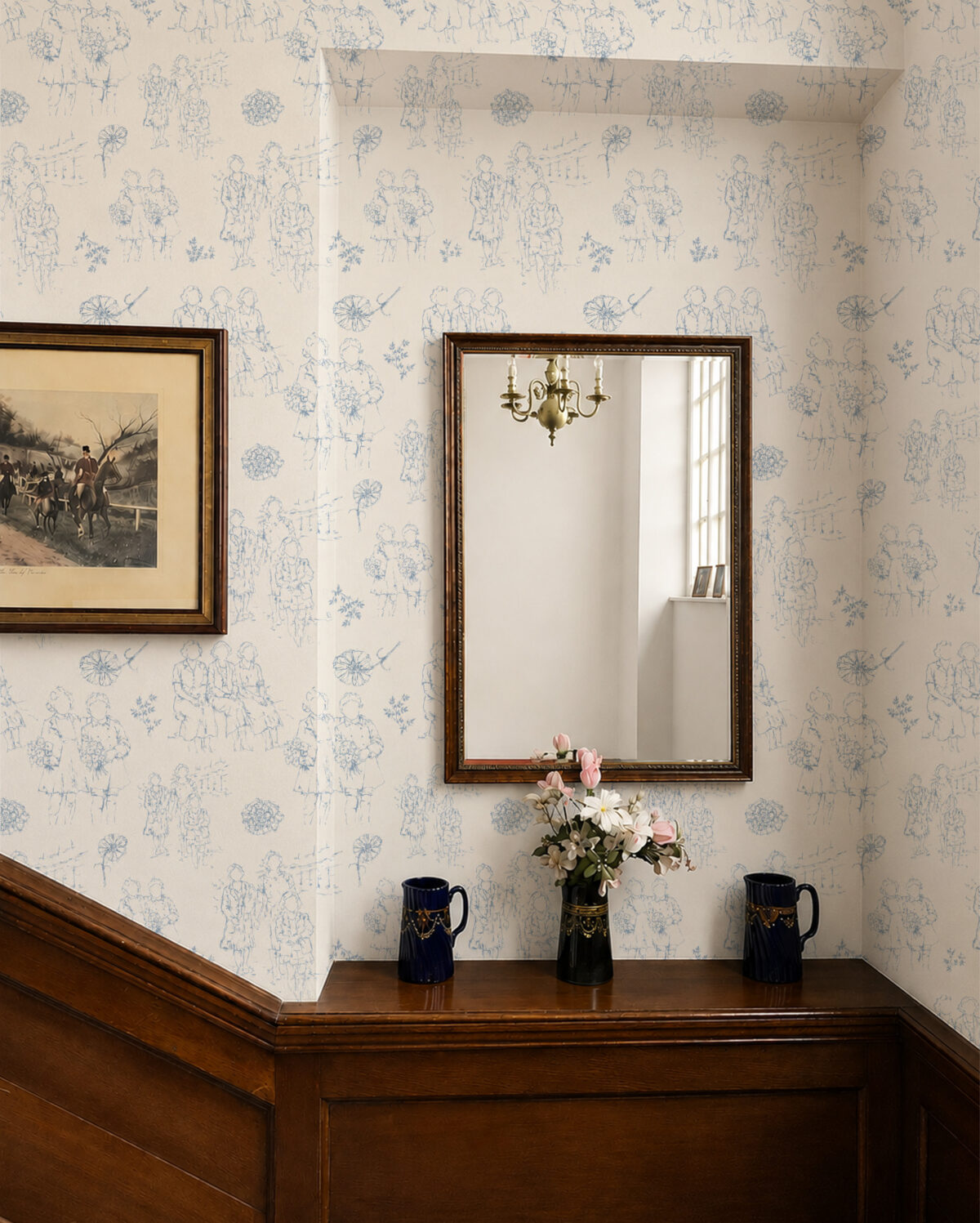
Hand-drawn and screen-printed toile-inspired wallpaper visualised within a domestic interior setting, developed from archival family photographs and childhood memories.
Tabitha’s project began with conversations with her grandmother and research into family archives, which were combined with trend forecasting and historical references before being developed into drawings, paintings and repeat patterns.
She hopes to continue developing ‘Traces of Her’ as part of her professional portfolio while pursuing a career in textile print design. She believes the project demonstrates how pattern can be both commercially relevant and emotionally meaningful, encouraging people to recognise the stories embedded within the objects that surround them.
Find out more about Tabitha’s project on the SDCA Degree Show website.
Exploring identity and belonging through fine art
For her final-year project, Fine Art student Zarah Mangera combined photography, reclaimed materials and family heirlooms to investigate how memories are shaped by migration, cultural heritage and lived experience.
Drawing on her experience of growing up between British and Indian cultures, Zarah's project brought together photographs taken during a visit to India with reclaimed materials sourced from both India and the UK. Through photographic transfer, collage and photo-object construction, she created a series of fragmented worksthat reflect how memories evolve.
Zarah said: "The project was inspired by my own experiences growing up between British and Indian cultures and by a desire to better understand my relationship to places that feel both familiar and unfamiliar.
"A significant part of the work stems from returning to my father's village in Gujarat after many years away. Revisiting locations I remembered from childhood made me aware of the distance between memory and reality. Some places felt instantly recognisable, while others felt completely transformed.
“This experience led me to think about how memories are formed, inherited, altered and carried across generations."

The window shutters outside Zarah’s family home in India.
Rather than presenting photographs as fixed records, Zarah used techniques including transfer printing, layering, sanding and tearing to deliberately disrupt and transform her images. By transferring photographs onto reclaimed materials such as wood, brick and found objects, she created works that mirror the fragmented and evolving nature of memory.
The project also featured a large-scale installation incorporating family heirlooms transported from India, including handmade teak windows suspended within the exhibition space.
Family remained central throughout Zarah’s project, with the work exploring how stories and histories are passed down through generations and continue to shape our understanding of ourselves.
In recognition of her work, Zarah was awarded the Edward Sharp Prize during the Degree Show.
Looking ahead, she hopes to continue exploring these themes through exhibitions, collaborative projects and community engagement. Zarah plans to return to the villages where her parents grew up and work with local young people through creative workshops that encourage participants to share their own stories and relationships with place.
Find out more about Zarah’s project on the SDCA Degree Show website.