Advanced radiotherapy
More effective and accessible cancer treatments
Radiotherapy relies on delivering enough radiation to damage a tumour while limiting unwanted dose to surrounding healthy tissue. New approaches can change how radiation is distributed in space or time, or introduce additional materials that alter how radiation interacts with tissue. These approaches can improve the balance between tumour control and healthy-tissue damage, but also create new challenges in predicting and measuring the dose that is actually delivered.
We combine radiation-transport modelling, dosimetry and experimental measurements to investigate advanced radiotherapy techniques. Our research explores new radiation sources and methods for controlling where energy is deposited, with the longer-term aim of enabling more precise and practical forms of radiotherapy.
Compact X-ray sources for microbeam radiation therapy
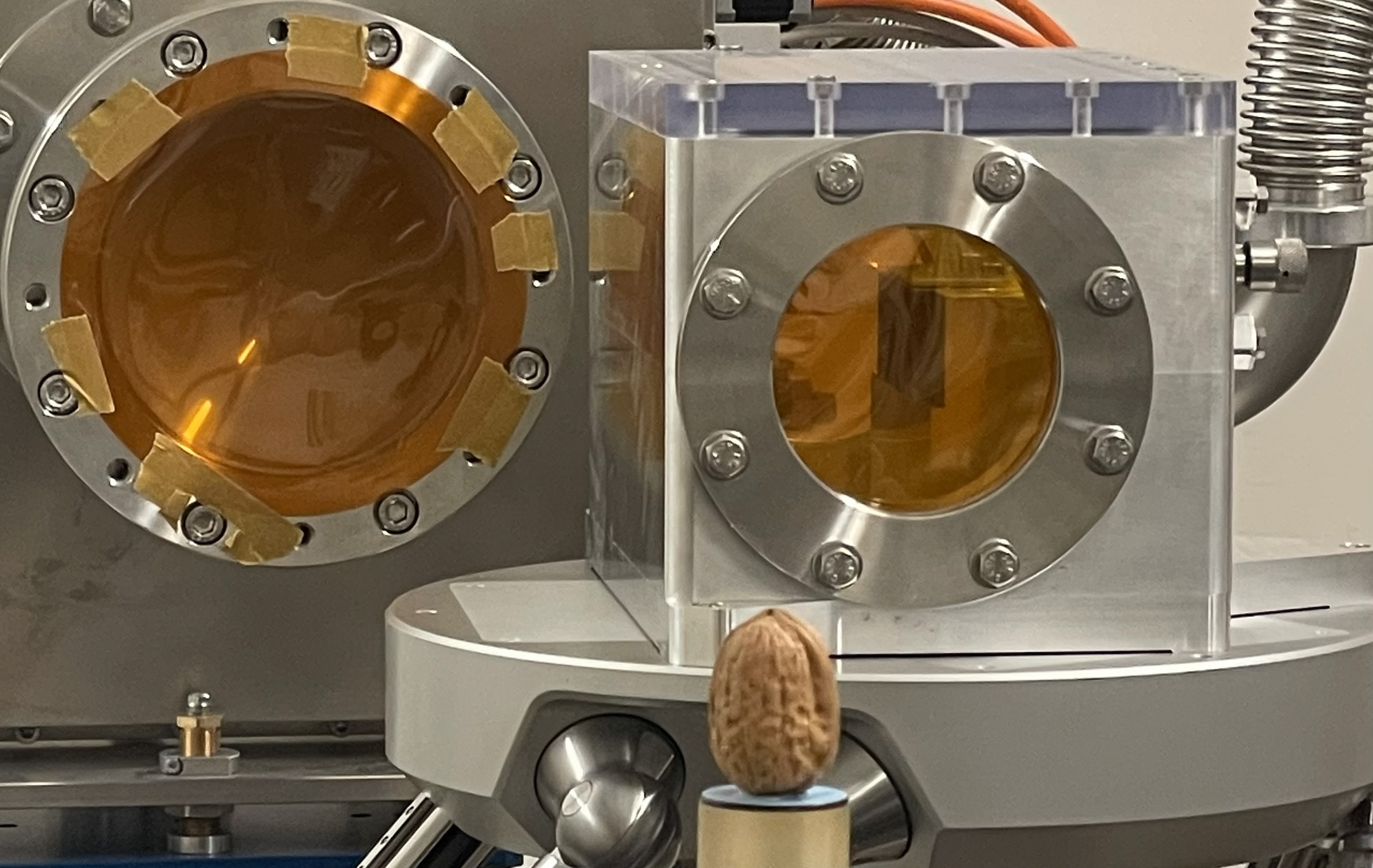
Microbeam Radiation Therapy (MRT) is a promising pre-clinical radiotherapy technique that uses arrays of very narrow, parallel X-ray beams rather than the broad beams used in conventional radiotherapy. This creates alternating regions of very high and low dose. Pre-clinical studies suggest that healthy tissue is more tolerant of this highly spatially fractionated dose than tumours, creating the potential to treat tumours while reducing damage to surrounding tissue.
MRT is currently carried out using synchrotrons, which limits where the technique can be studied and potentially used. We are investigating whether compact Inverse Compton Scattering (ICS) sources could provide the X-ray beams needed for MRT in a much smaller facility. Our work combines radiation-transport simulations with experimental measurements at the ThomX ICS facility in France to characterise these sources, investigate their suitability for MRT and determine how their beam properties influence the dose that can be delivered.
Researchers: Jenny Spiga, Henry Priestley
Collaborators: ThomX
Dose enhancement for radiotherapy
Metal-based compounds can be used to increase the amount of radiation deposited locally during X-ray radiotherapy. Many of these materials are already used as contrast agents in medical imaging and, because of their high density and atomic number, absorb significantly more X-rays than soft tissue. If concentrated within a tumour, this increased interaction with radiation can enhance the dose deposited in the surrounding region.
Our research investigates how factors including X-ray energy and the type and concentration of dose-enhancing material affect this additional dose. We use radiation-transport simulations alongside experimental measurements to understand and optimise these interactions, including their use with emerging techniques such as microbeam radiation therapy.
Researchers: Jenny Spiga